
Brancusi, the Birth of Modern Sculpture and Photographs exhibition
Text and Photography by Mart Engelen (pages 7-8-9)
Pages 10-11-12-13 Succession Brancusi/Adagp Paris 2025
All rights reserved.
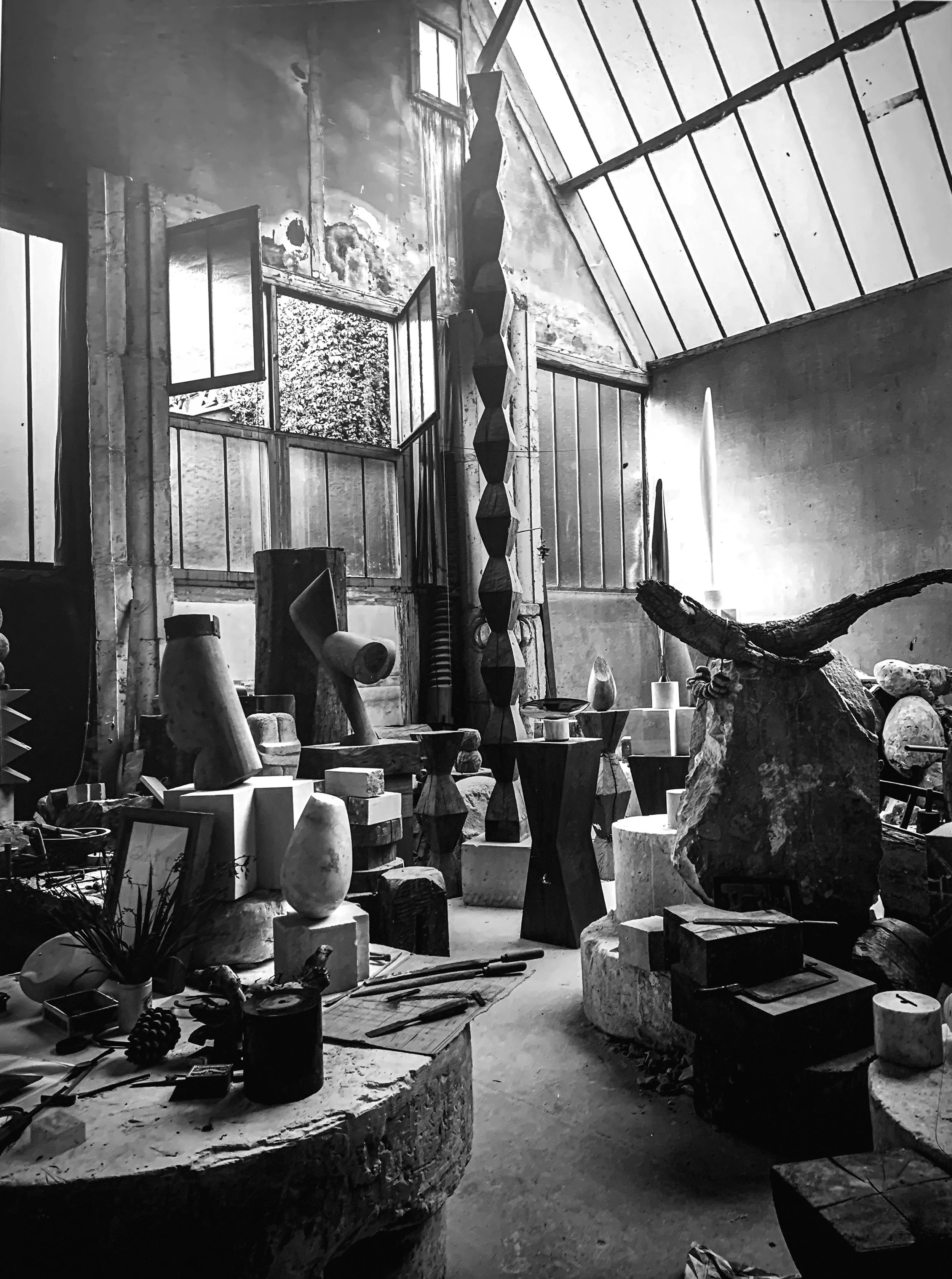
Constantin Brancusi
Vue d’ensemble de l’atelier, c.1926
Universally celebrated as the father of modern sculpture, Constantin Brancusi (1876-1957) captured the pioneering spirit of the twentieth-century avant-garde. H’ART Museum in collaboration with the Centre Georges Pompidou organised a major exhibition in Amsterdam that brought together an exceptional collection of works by Brancusi, including thirty of his sculptural masterpieces with the original pedestals created by the artist, along with films and photographs. The exhibition traced Brancusi’s lifelong quest to reveal ‘the essence of things’, and explored how his pure forms revolutionised sculpture and ushered in a new artistic language. Visitors could follow a beautifully designed, themed route that included The Essence of Things, Animals and The Relationship with Architecture, organised around Brancusi’s major serial works to offer a striking and captivating overview of his radical artistic universe.
The Centre Pompidou rarely lends these very fragile pieces. These exceptional loans were made possible by the extensive renovation of the Centre Pompidou and the exhibition also marked a further chapter in the long-standing partnership between these museums in Amsterdam and Paris. It was also the first solo exhibition of Brancusi’s work in the Dutch capital and only the second to be held in the Netherlands (the other retrospective was in The Hague in 1970).
The collection originates from the artist’s original studio, which he bequeathed in its entirety to the French state in 1957.
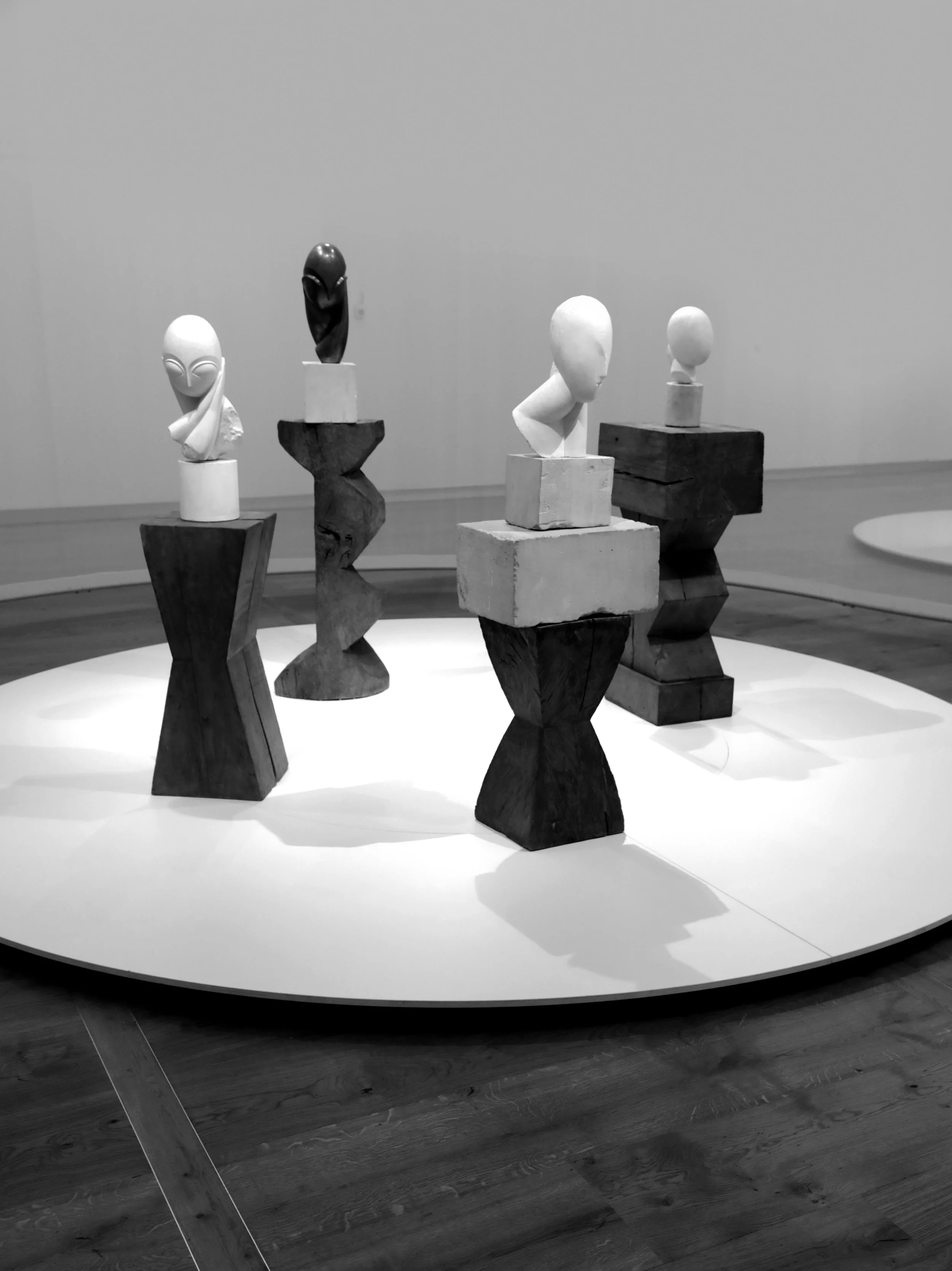
Portraits by Constantin Brancusi at the H’ART Museum, Amsterdam 2025
Incl. in front, left Mademoiselle Pogany, 1912-1913
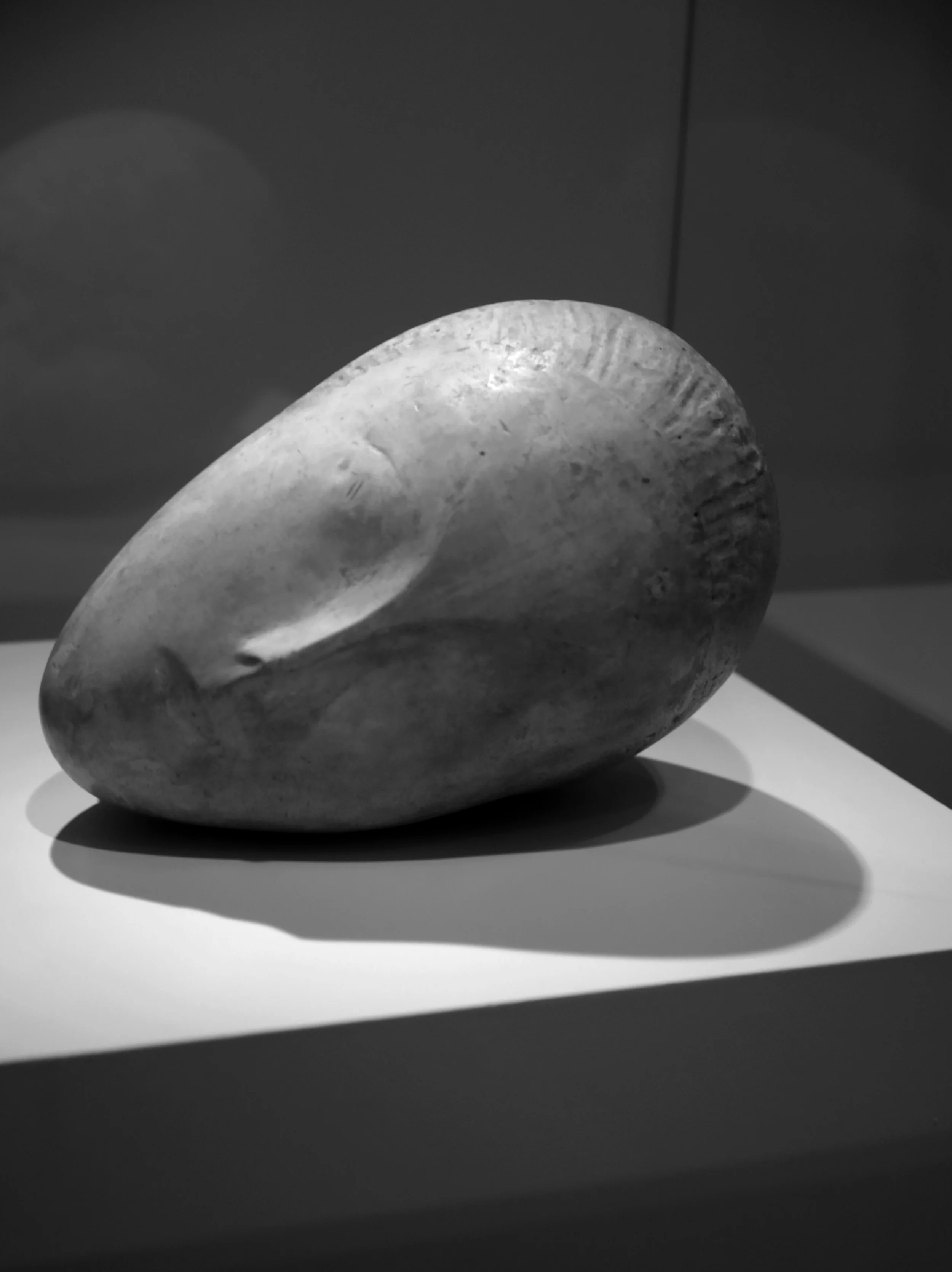
Constantin Brancusi
Sleeping Muse, 1910
Plaster patinated, 18 x 27.5 x 20.5 cm
Parallel to this, I visited the extraordinary Constantin Brancusi – Photographs exhibition at the Thaddaeus Ropac gallery in Paris which presented a unique selection of the Romanian artist’s photographic work, covering the period 1906-38. Photography was an integral part of Brancusi’s artistic practice and evolved alongside his sculpture from early in his career. Brancusi began experimenting with the medium after he arrived in Paris in 1904, and he was closely involved in the photographic and cinematographic avant-garde. He befriended numerous photographers including Edward Steichen, Alfred Stieglitz and Man Ray. In 1917, Brancusi met John Quinn, who would become one of his most prominent collectors. Crucially, Quinn acquired most of the sculptures on the basis of photographs. Some of Brancusi’s sculptures survive only as photographic likenesses, as epitomised by Woman Looking into a Mirror (1909-14), on display at the exhibition and in #59 Magazine, which Brancusi would radically rework into the eminent Princesse X (1915-16; Centre Pompidou, Paris), his phallic sculptural portrait of psychoanalyst Marie Bonaparte (see pages 12-13).
The Constantin Brancusi – Photographs exhibition is on at Thaddaeus Ropac London until 28 March 2026
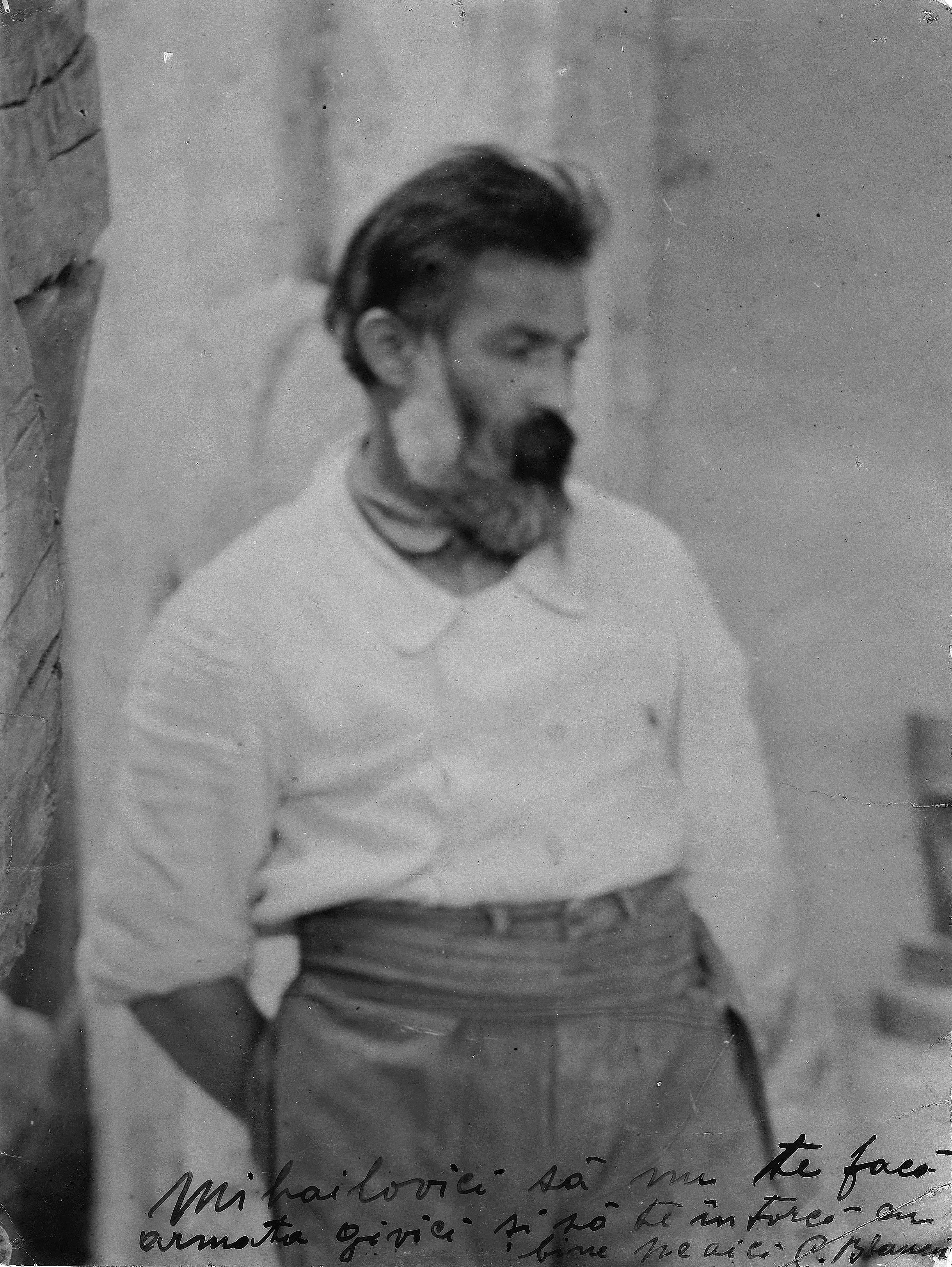
Constantin Brancusi
Self-Portrait, c.1922
Vintage silver gelatin print, 22,9 x 17,12 cm (CSBR1001)
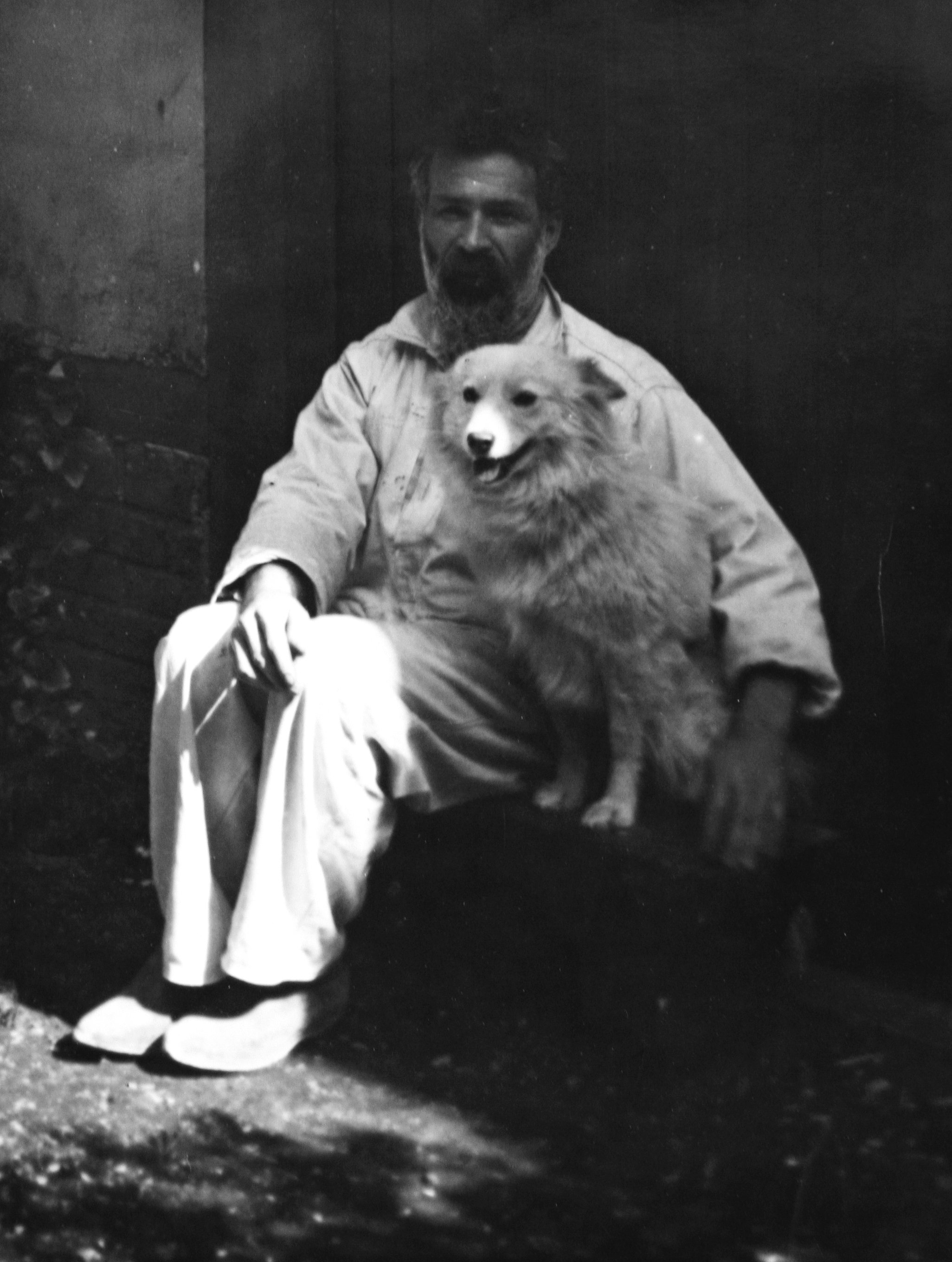
Constantin Brancusi
Self-Portrait with Polaire, c.1925
Vintage silver gelatin print, (CSBR1000)
23,5 x 17,5 cm